
AI Red Teaming
Adversarial testing that reflects real attacker behavior
DacShield AI Red Teaming helps teams identify how LLM applications fail in practice—prompt injection, tool misuse, data exposure, and unsafe agent actions—then track improvements over time.
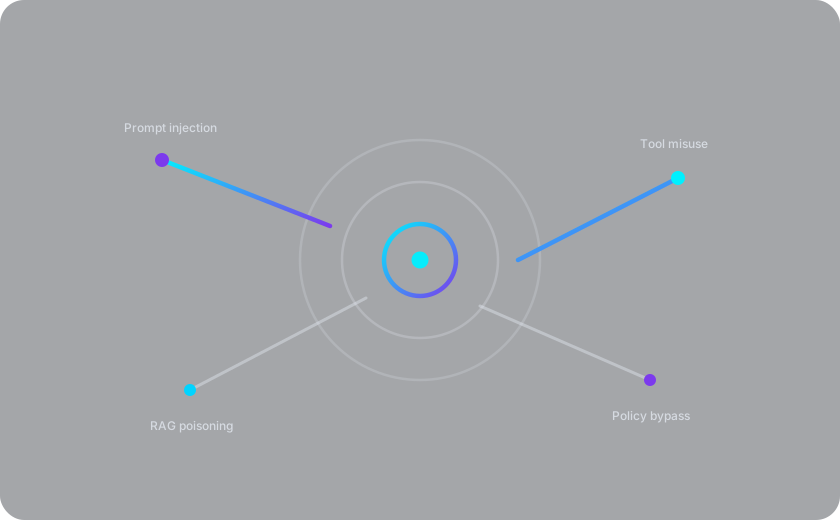
What gets tested
Tests are mapped to your AI surface area: prompts, tools, context sources, user journeys, and control boundaries.
Prompt injection paths
Attempts to override instructions, bypass policy, or exfiltrate sensitive context.

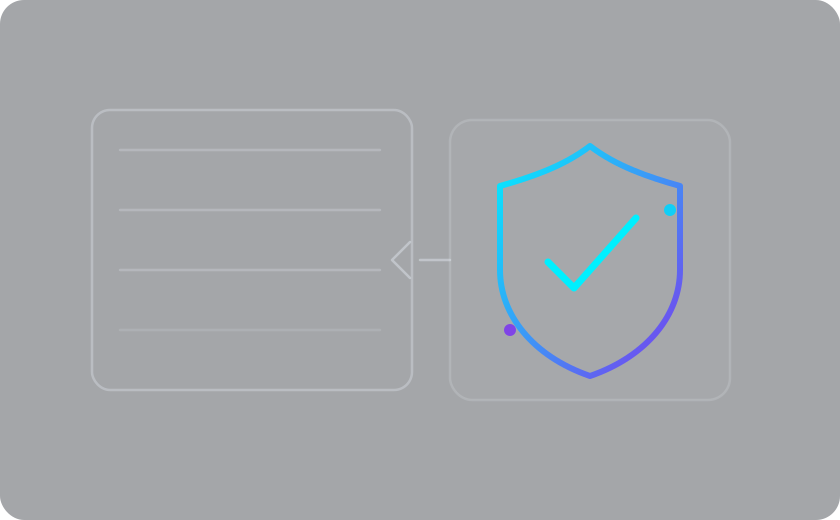
Tool and agent misuse
Attempts to coerce tools into unsafe actions or broaden permissions.


RAG boundary failures
Attempts to retrieve restricted data or poison context with risky sources.

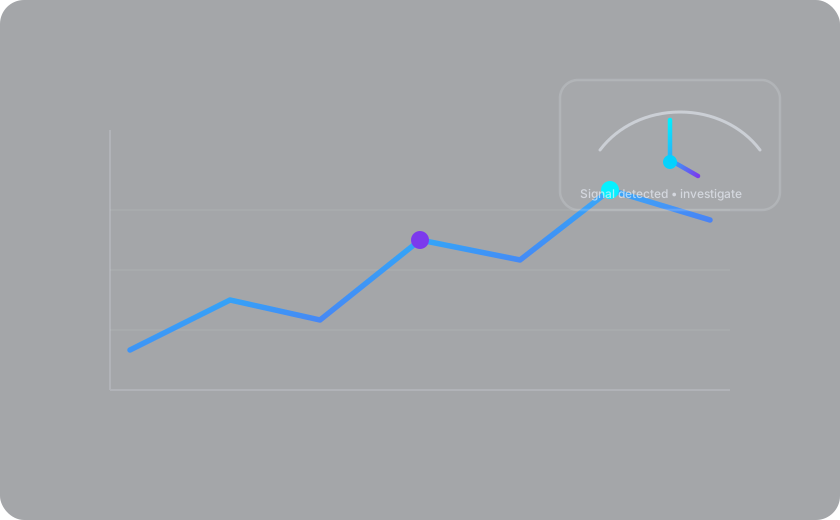
A repeatable workflow
You get a structured testing plan with evidence outputs that can be rerun as prompts, tools, and policies change. The goal is continuous assurance—not a one-time report.
1) Scope & boundary mapping
Define prompts, tools, data sources, and control points.
2) Attack plan & test execution
Run adversarial tests aligned to real failure modes.
3) Findings & mitigation mapping
Translate outcomes into guardrail controls and monitoring signals.
4) Regression testing
Re-run tests to confirm fixes and prevent reintroduction.
What you receive
A structured summary of tested surfaces, observed behaviors, and recommended control improvements.
- Coverage map by surface area (prompts/tools/RAG)
- Observed failure modes and risk signals
- Mitigation recommendations for guardrails
- Monitoring recommendations for ongoing detection
- Governance-ready summary for stakeholders